Robotaxi Industry Faces Competition as Tesla Joins the Race
Disruption: A Constant in Wall Street
Technological advancements continue to drive disruption on Wall Street, leading to profitable long-term trends. Companies that do not adapt risk significant decline. A notable example is Blockbuster, which failed to evolve while Netflix (NFLX) moved from DVD rentals to streaming, resulting in Blockbuster’s demise and Netflix’s rise as a top stock in the 2000s.
Advantages of Robotaxis
The concept of autonomous vehicles has transitioned from theoretical to practical in recent months. Innovations in artificial intelligence, software, and sensors have enabled the rise of robotaxis, which offer several advantages:
- Safety: With a significant number of drivers distracted by their Apple (AAPL) devices, robotaxis aim to minimize human errors and distractions, leading to fewer accidents.
- Cost Reduction: Removing human drivers allows ride-hailing services to enhance profitability.
- Increased Availability: Robotaxis can operate almost continuously with minimal downtime, boosting customer satisfaction and earnings.
The Robotaxi Competition Intensifies
Currently, Alphabet’s (GOOGL) Waymo leads the robotaxi sector. Waymo is notably the first to receive regulatory approval and now operates in four U.S. cities, with plans to expand. The service has grown rapidly, offering over 250,000 paid rides weekly. Additionally, Waymo has partnered with Uber Technologies (UBER), which dominates the ride-sharing market.
Tesla’s Anticipated Entry into Robotaxis
Tesla (TSLA) and CEO Elon Musk, while currently trailing in the robotaxi sector, remain committed. Musk has repeatedly stated a strong belief in autonomous vehicle technology, predicting it will revolutionize transport and potentially quintuple Tesla’s value. After previous delays, Tesla has begun testing its robotaxi service with employees in Austin, Texas, and plans to launch the service to customers via its mobile app next month.
The Race: Waymo vs. Tesla
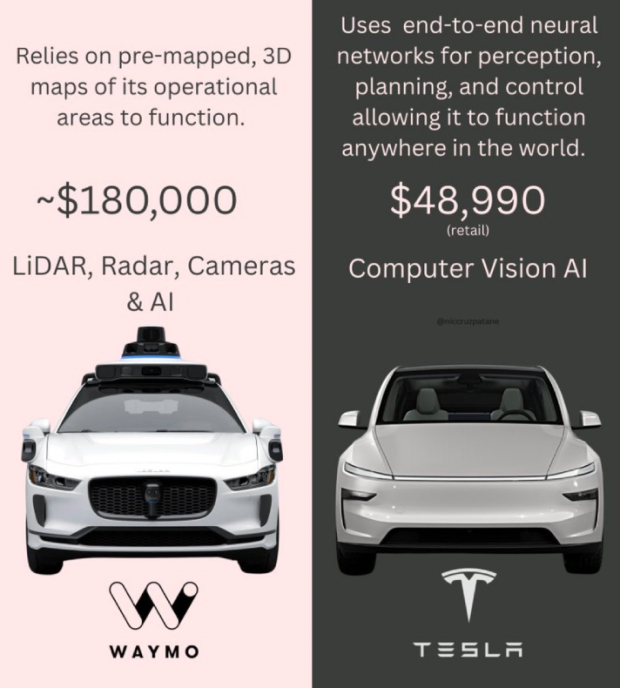
In the current landscape, Waymo holds a clear edge due to its operational experience. Tesla, although yet to release its service, has a noteworthy cost advantage. Waymo vehicles, utilizing advanced LiDAR and AI, are substantially more expensive to produce, around $180,000 each. In contrast, Tesla robots, relying on computer vision, come in at about $50,000.
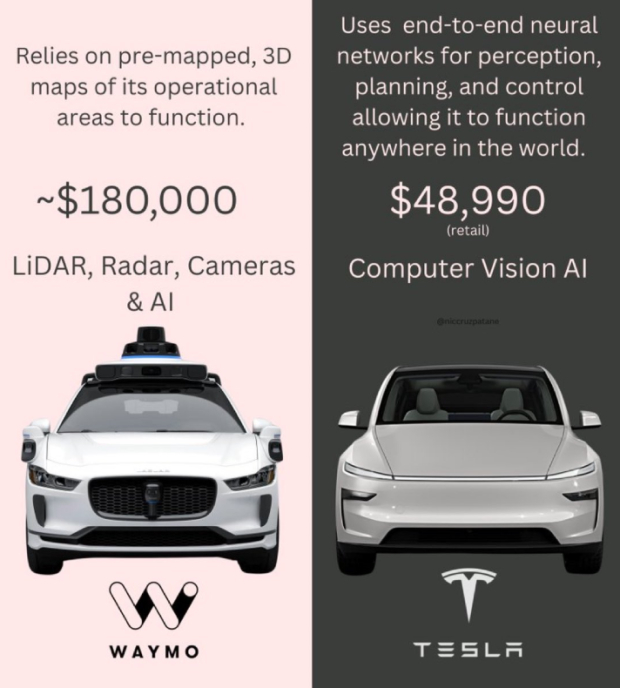
Image Source: @teslaownersv
While Tesla is currently behind, its lower production costs could help it catch up in scale and profitability.
Conclusion
Waymo leads the market, but Tesla’s upcoming entry and cost strategy introduce uncertainty, suggesting that competition in the robotaxi sector is just heating up.
5 Stocks Our Experts Predict Could Double In the Next Year
By submitting your email, you'll also get a free pivot & flow membership. A free daily market overview. You can unsubscribe at any time.