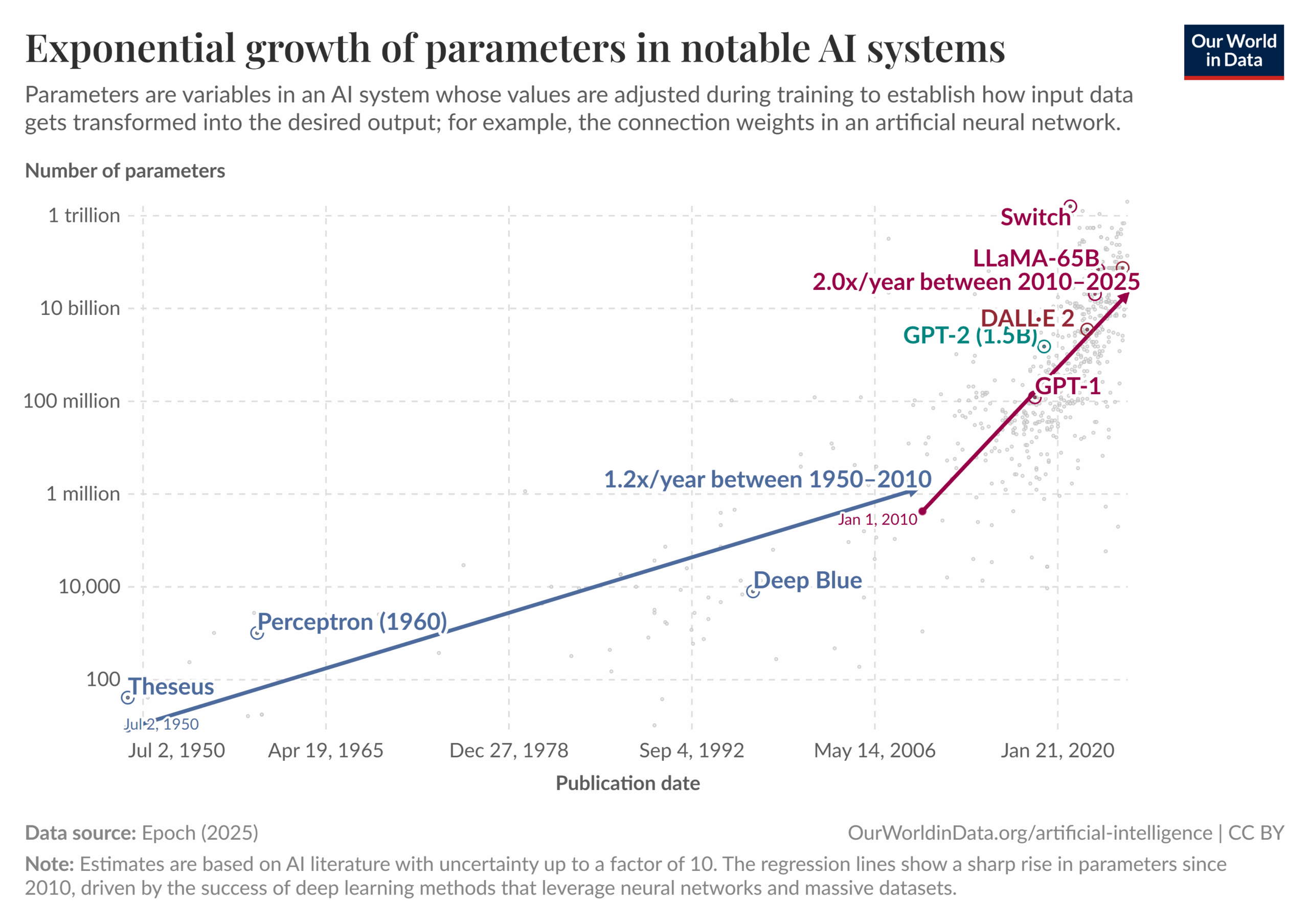
In a recent analysis, the exponential growth of artificial intelligence (AI) capabilities is highlighted, particularly focusing on the number of parameters in notable AI systems. From 2019 to 2025, models like GPT-2, GPT-3.5, and Claude 3.7 have evolved to handle complex tasks with significant speed and accuracy, with Claude 3.7 achieving an 80% success rate on tasks that previously took longer to complete.
Meta is leading the charge in practical applications of AI, reportedly planning to automate 90% of manual ad workflows within 18 months through its internal “AI Marketing Engine”. Furthermore, Google’s Veo 3 generative AI model has advanced to creating high-quality video scenes in mere minutes, suggesting a future where entire filmmaking processes could be automated.
Looking ahead, the potential market for humanoid robots and AI-driven autonomous agents is estimated to reach $30 trillion, indicating profound changes in various sectors, including marketing, media, and operational roles across industries.