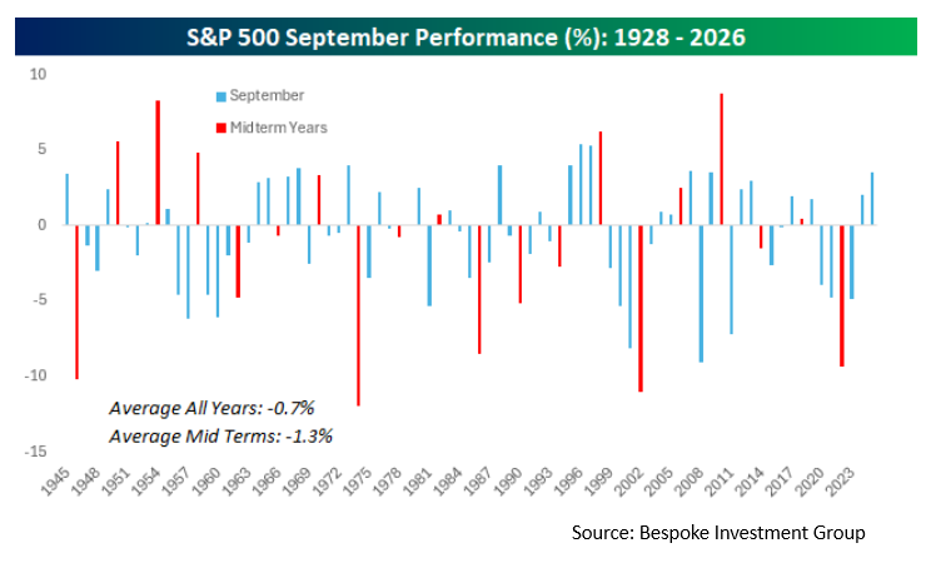
Historically, September is Wall Street’s weakest month, with the Dow averaging a loss of 1.1% and the S&P 500 dropping about 0.7% since 1945. In midterm-election years, such as 2026, the S&P 500 has faced even greater declines, averaging a 1.3% drop during September. Key factors contributing to this volatility include upcoming tax payments and Federal Reserve policy meetings, with the next meeting scheduled for September 15-16.
Despite September’s challenging reputation, current market conditions are stronger than usual. All major indices showed gains in August, and recent data from FactSet reveals a 52% average earnings growth for the S&P 500 in Q2 2026, with a projected 28.2% growth for Q3. Companies like NVIDIA are reporting exceptional revenue growth, indicating underlying strength in the market.
Amid anticipated market fluctuations, investors are advised to view potential dips as buying opportunities, particularly in fundamentally strong stocks related to the artificial intelligence sector. As economic indicators evolve, the market’s overall resilience may offer favorable prospects despite historical anxieties surrounding September.
5 Stocks Our Experts Predict Could Double In the Next Year
By submitting your email, you'll also get a free pivot & flow membership. A free daily market overview. You can unsubscribe at any time.